



Histories of UK potters and pottery manufacturers
© Michael Perry 2011. Contact
Image courtesy of Lema Publishing Ltd, publishers of ‘Tableware International’ www.tablewareinternational.com
Midwinter (W. R. Midwinter (Ltd))
c.1910–1970
Earthenware manufacturer at the Albion Pottery and the Hadderidge Pottery, Burslem. W. R. Midwinter Ltd was founded by William Robinson Midwinter at Bournes Bank, Burslem in about 1910. William Midwinter served in the Royal Navy during the First World War and care of the business was left in the hands of his wife. Further expansion followed in the 1920s and 1930s and the firm eventually occupied the Albion Works and Hadderidge Potteries, Burslem. Production continued through the Second World War at a much reduced level and following the end of the war W. R. Midwinter was joined in the business by his son William Roy Midwinter.
Roy Midwinter assumed control of the business on the death of W. R. Midwinter in the late 1950s and under his management the business became one of the leading producers of domestic earthenware in the 1950s and 1960s. Midwinter acquired A. J. Wilkinson Ltd and Newport Pottery Co. Ltd in 1964, but the firm encountered financial difficulties in the late 1960s and merged with J. & G. Meakin Ltd in September 1968. The holding company for the combined group was Meakin & Midwinter (Holdings) Ltd, but the new Meakin-Midwinter business was itself was taken over by the Wedgwood Group in January 1970. W. R. Midwinter Ltd continued as a semi-autonomous unit within the Wedgwood Group until Wedgwood closed the business in 1987. Roy Midwinter left Wedgwood in 1981 and became associated, as a designer, with Federated Potteries Ltd. He died in 1990.
Under the influence of Roy Midwinter the company led the revolution in tableware design in the United Kingdom in the 1950s, 1960s and 1970s. Drawing inspiration from the American designers Eva Zeisel and Russell Wright, Midwinter launched the contemporary Stylecraft range in 1953 and the even more radical Fashion shape in 1955. The latter, designed by Roy Midwinter and fellow director William Lunt is typical of the Midwinter style of the 1950s and early-1960s and is characterised by flowing lines and the integration of handles and other parts into the body of the ware. With its rimless plates and fluid, organic lines it is now regarded as an icon of 1950s design. The memorable patterns produced by Midwinter’s in-house designer Jessie Tate or commissioned from artists such as Hugh Casson, who’s drawings of French scenes under the name ‘Riviera’ are now so highly sought, contributed materially to the firms success.
In 1960 Roy Midwinter commissioned David Queensbury (later Marquis of Queensbury),
to design the ‘Fine’ shape launched in 1962. This was a radical departure from the
flowing, organic shapes popular in the 1950, but its spare cylindrical shape again
caught the public mood. 
The Fine shape was re-modelled in 1966 and launched as the ‘MQ1’ and a second Queensbury design the ‘MQ2’ shape was launched in the same year. Roy Midwinter was also instrumental in the development of the ‘Stonehenge’ range released in 1972. With its speckled glaze and bold lines it too caught the mood of the times and the strongly coloured ‘Sun’, ‘Moon’ and ‘Earth’ patterns designed by Eve Midwinter were enormously popular until their withdrawal from the market in the early 1980s.
Post-war marks include the company name and many cases the shape name -‘Stylecraft’, ‘Fashion’, ‘Fine’, ‘Stonehenge’ etc. The name of the artist responsible for the pattern is also often included.
© Mike Perry 2010
W. R. Midwinter Ltd
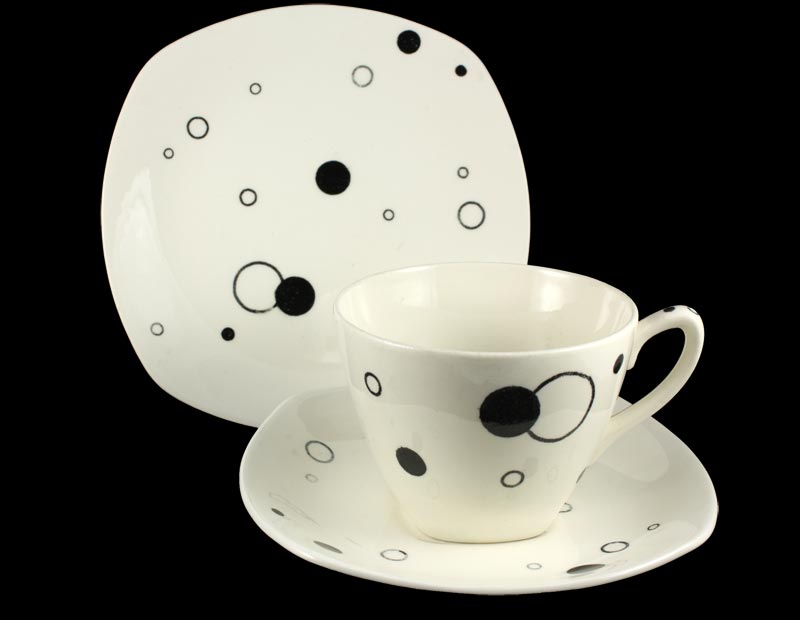
‘Poirrot’ on the ‘Fine’ shape was a popular pattern in the early 1960s.
Image: © Michael Perry 2010
W. R. Midwinter Ltd
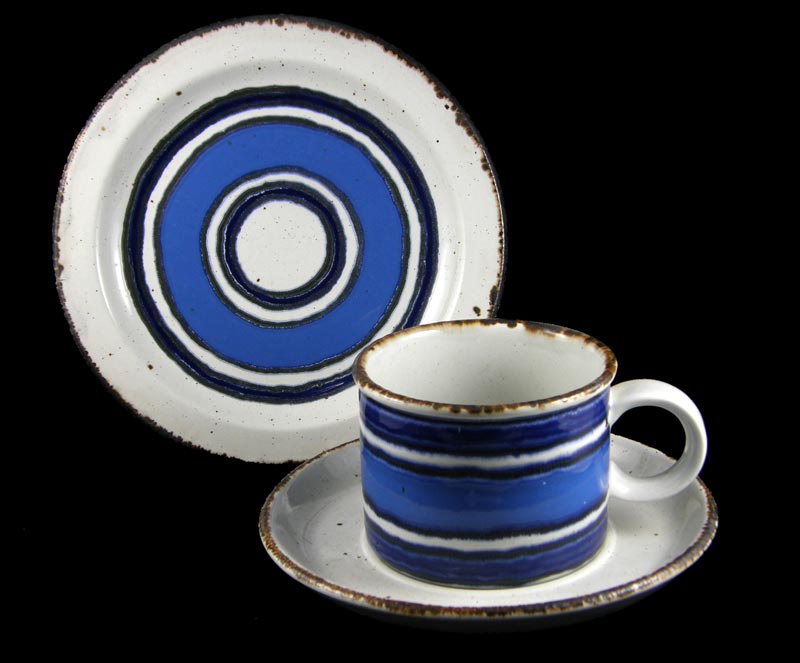
Midwinter’s ‘Moon’ pattern on the Stonehenge shape was enormously popular through the 1970s and early 1980s
Image: © Michael Perry 2010
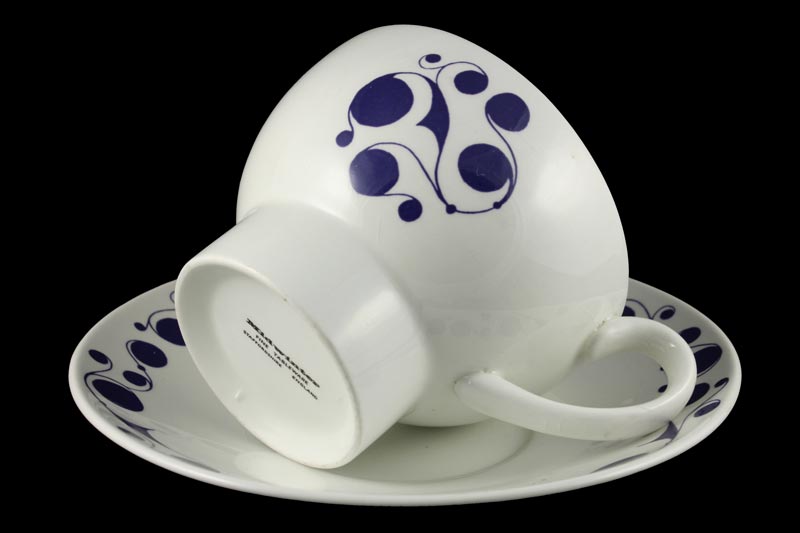
W. R. Midwinter Ltd
The MQ2 shape released in 1968 was designed in collaboration with the Marquis of Queensbury. The shape was not a success in the marketplace and the costs of its development contributed to the takeover by J. & G. Meakin in 1968. This pattern was also named ‘Poirrot’.
Image: © Michael Perry 2010
